There are many and varied causes of upper back pain. This article will cover some of the most common clinical variants and the strategies used to treat them at Chris Gauntlett Myotherapy. This article is not intended to provide an exhaustive list of upper back pain causes, but rather to give patients an idea of what to expect from assessment and treatment.
Rarely is there just one single cause of upper back pain. Instead, aetiology is often complex, comprising multiple causal drivers. Some of the most common causes for upper back tension include visceral, fascial, neural, musculoskeletal, movement/body mechanics, and postural factors.
In addition to explaining these common causal drivers and the fundamentals of the clinical treatment techniques used, several simple self-care strategies and tips that can be done at home with minimal equipment will also be provided.
Visceral
There are many and varied forms of visceral tension that can contribute to upper back pain and restriction. There are several important reasons for this. The first is that the health of the internal organs is essential for life, and the body will prioritise their well-being over muscular health and tension. When an organ is restricted or dysfunctional, the body reflexively tightens the surrounding musculature to prevent further irritation of the affected organ.
The second reason is that nothing in the body operates in isolation; there is an interconnected pressure system that operates across the three major cavities of the body—the cranium, thorax, abdomen, and pelvis. The average pressures in each of these locations are:
- Cranium: +15cm H₂O
- Thorax: -5cm H₂O
- Abdomen: +10cm H₂O
- Pelvis: +20cm H₂O
If there is a restriction or dysfunction in one cavity that affects the cavity’s pressure, this can lead to a compensatory pressure change in another cavity. A classic example of this is a hiatus hernia, where increased pelvic pressure and pelvic floor tension lead to a compensatory rise in pressure in the upper abdomen and lower thorax, resulting in a hernia above the level of the main stomach body.
A typical example of visceral restriction in the thorax that leads to upper back tension and dysfunction is the interface of the lungs and the heart. Whenever the thorax rotates, the pleura of the lungs must glide smoothly and rotate around the pericardium of the heart. When a visceral restriction is present, either of the pericardium or the pleura, this rotation can be significantly impaired. Muscular tension, which protects the heart and lungs, results in increased pain and reduced thoracic range of motion.
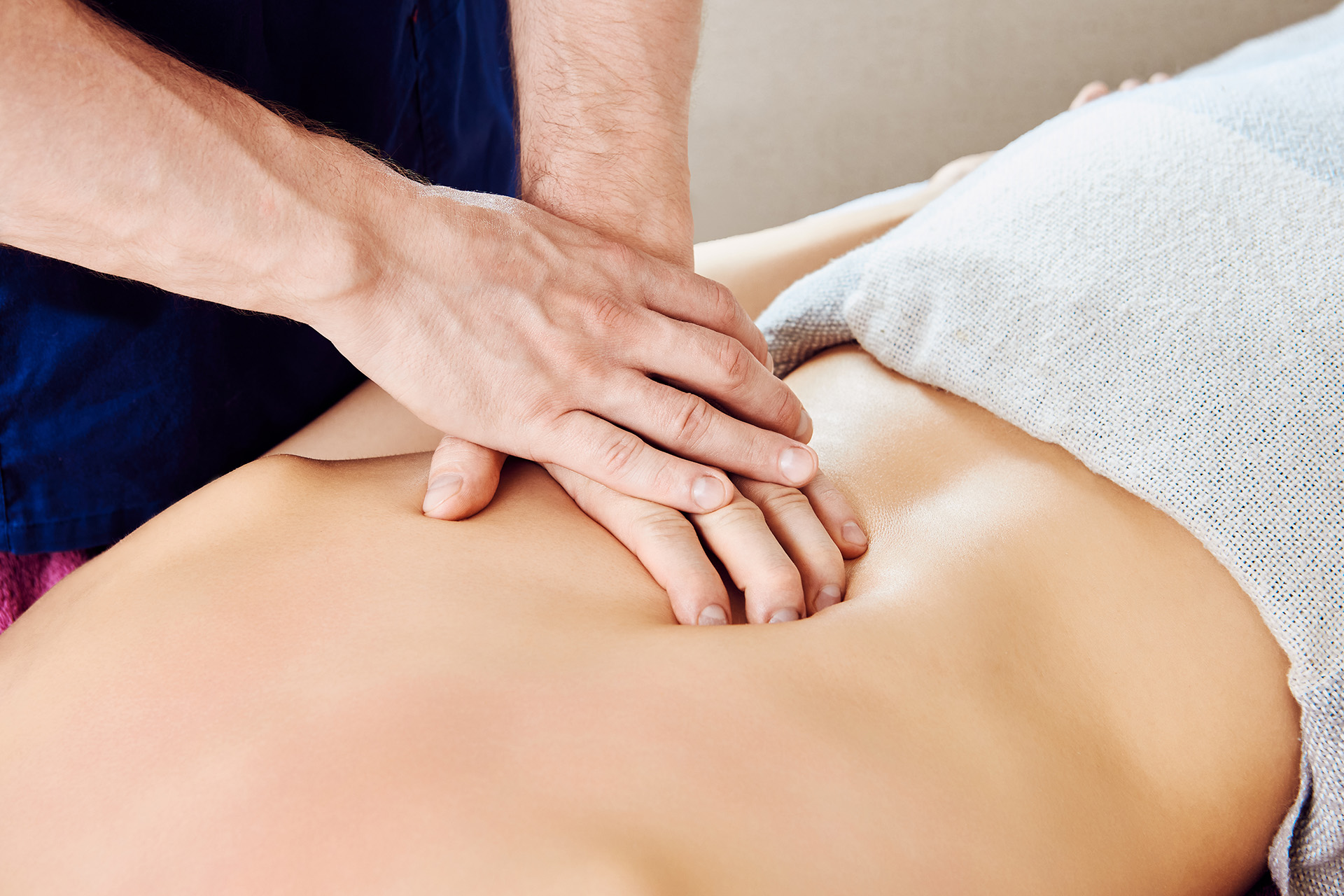
There can be many reasons for this visceral restriction, including surgeries, physical trauma such as impacts or car accidents, infections such as Covid and pneumonia, and emotional and psychological causes. Restoration of organ movement and function is a straightforward process. However, it does require the precise manual techniques of a trained visceral manipulation therapist.
Fascial
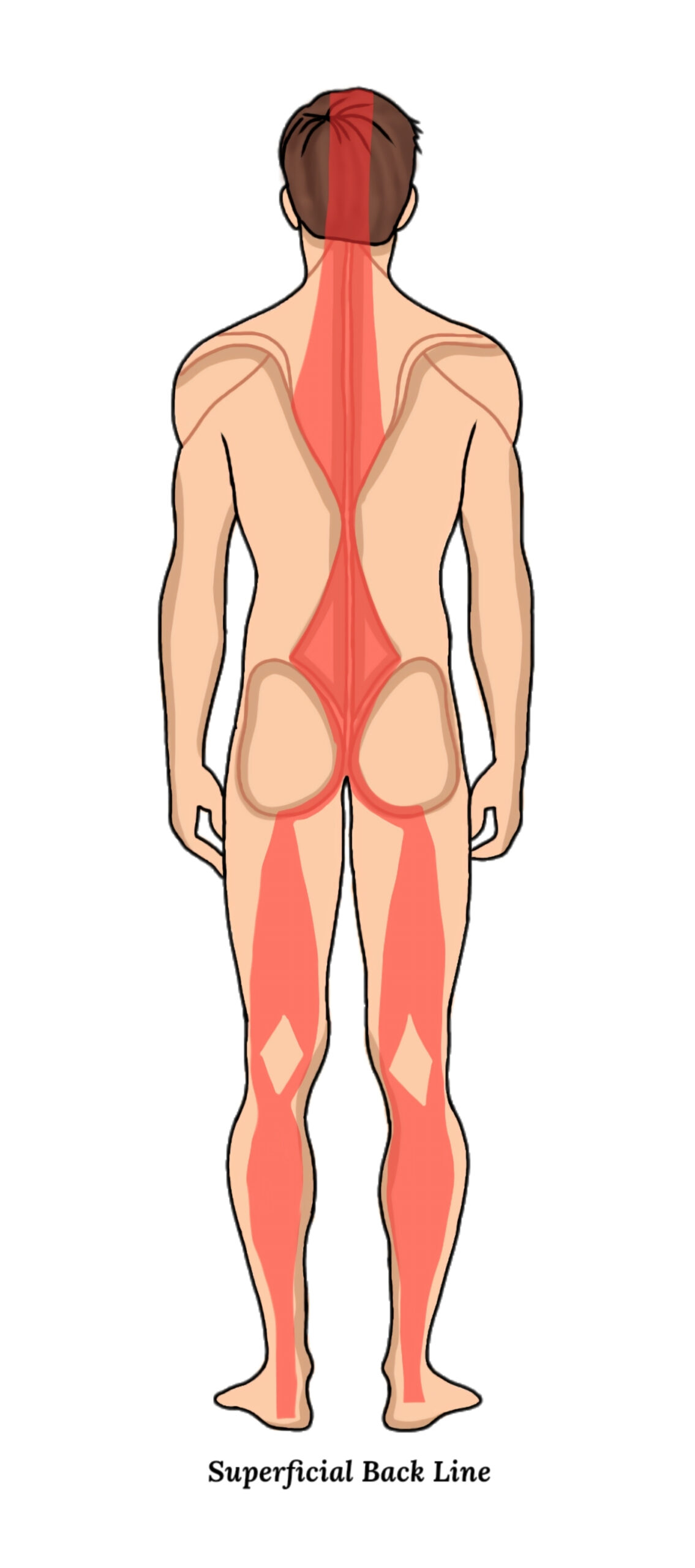
Fascia, or connective tissue, can be best conceptualised as a supportive web running throughout the body. Fascia runs through muscle fibres, surrounds muscles in a stockinged sheath, supports the internal organs, gathers and concentrates to form ligaments, and mechanically connects one tissue group to another. Fascia forms trains of connection throughout the musculoskeletal system to provide support, proprioceptive feedback to the nervous system, and to act as a mechanism for storing and releasing elastic potential kinetic energy.
Due to this highly interconnected fascial system, dysfunction in one, seemingly unrelated, area of the body can lead to pain and dysfunction in another. For example, the myofascial Superficial Back Line begins at the ball of the foot, runs over the heel, up through the calves and into the hamstrings, via the sacrotuberous ligament, into the muscles of the back, and then continues into the posterior neck, over the scalp, and finally finishes at the eyebrows. Therefore, in theory, a severe case of plantar fasciitis can lead to increased tension and dysfunction higher up the chain in the neck.
Neural
The nervous system can be conceptualised as an interconnected highway running throughout the body. Much like the fascial system, dysfunction or tension in one area of the nervous system can lead to compensatory tension in another location.
For a nerve to be in good functional health, it needs to be able to slide and glide freely amongst the surrounding tissue to allow for joint movement and muscle lengthening and contraction. When this ability is compromised, protective muscle tension results, often accompanied by pain, particularly during movement. The increased tension in the surrounding tissues further constricts the nerve, making it difficult for blood and lymphatic fluid to enter and exit the nerve tissue. This, in turn, starves the nerve of oxygen and nutrients and impairs the nerve’s ability to expel metabolic waste, creating a vicious cycle of increasing tissue degeneration.
Upper back tension and pain can have a neural component stemming from the restricted nerves of the local muscles of the thoracic spine and shoulders, or from the legs and pelvis, or from above in the nerves of the neck and cranium. To treat neural restriction effectively, precise assessment is essential to accurately identify the primary restriction in the nervous system, as symptoms can often appear in seemingly unrelated or distant areas.
Once the primary causal location of neural restriction has been assessed, treatment will involve gentle neural manipulation techniques. Nerves do not like being compressed — doing so has the potential to cause painful and debilitating neuropathies. If your therapist claims to be treating a neural restriction and they are doing so with a heavy-handed technique, they are likely doing more harm than good. Instead, nerves respond well to very light and gentle pressure while stretching the restricted tissue. While the relaxation of surrounding muscle tissue will be immediate, recovery of nerve tissue health will be gradual; nerve tissue takes approximately six to eight weeks to rehydrate.
Musculoskeletal/Postural
Musculoskeletal pain in the upper back is more often a symptom than the primary cause of dysfunction; the muscles are the victims, not the culprits. Treating the muscles in these instances will only provide temporary relief at best. However, there are circumstances where muscular tension is the main issue.
One example of this is due to a strength and flexibility imbalance across opposing muscle groups. Such an imbalance amongst athletes is often the result of poor strength training programs. For the general population, posture is often a key factor.
Many of us living in the modern world lead increasingly sedentary lives, particularly at work. The human body was not designed to spend eight hours a day sitting in front of a computer. The effect of this is that the upper back rounds and hunches, with the shoulders rotating in and forward. The muscles and fascia of the anterior chest and shoulders are held in a shortened position. In contrast, the posterior muscles and tissues of the upper back are held in a lengthened position.
Our bodies are highly intelligent and adaptive machines. Over time, our bodies adapt to this position, and rather than expend resources and muscular energy fighting to hold us up, more collagen and connective tissue are laid down in the fibres of the posterior muscles, turning them into hardened straps, akin to guy ropes on a bridge holding us up against gravity. While this is mechanically efficient, the increased volume of collagen in the muscle tissue impairs the ability to take up oxygen and nutrients and to expel metabolic waste.
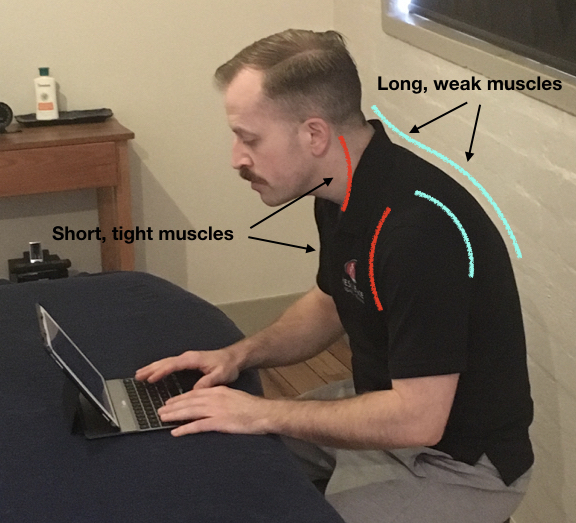
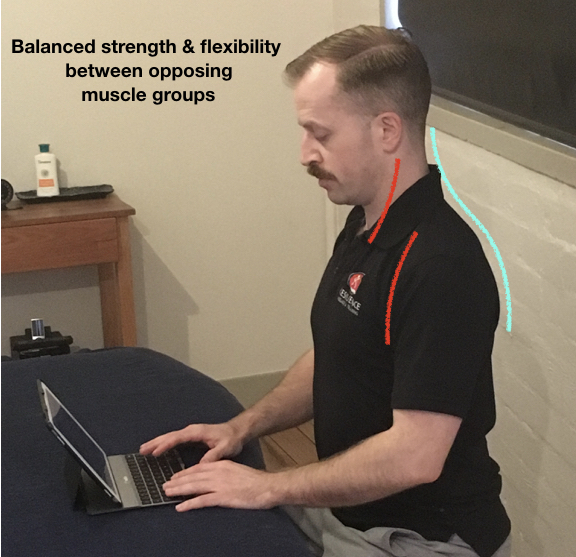
The consequence of this physiological change in the tissues is muscular pain and dysfunction.
Fortunately, treatment is relatively straightforward and involves:
- Targeted strength and flexibility exercises to address imbalances.
- Postural cues to prevent these imbalances from returning.
- Myotherapy and manual soft tissue techniques to restore muscular metabolic health.
It is important to note that all three approaches are essential for treating current symptoms and ensuring lasting tissue changes.
To achieve the postural balance and symmetry of strength and flexibility, the following exercises and stretches are invaluable:
Movement and Body Mechanics
The thoracic spine, or upper back, is designed for rotation and some flexion/extension. To be in good health, the thoracic spine needs to be able to move, in particular, rotate. This rotational movement is vital for dispersing the force of ground contact when walking or running and for storing and releasing kinetic energy in all sports and activities with a rotational component. Thoracic rotation is also essential for healthy shoulder and neck mechanics.
The human body is an incredibly intelligent and integrated machine. When a movement deficit appears in one area, another area will endeavour to compensate.
Two common examples of this are:
- Lumbar spine restriction — Restriction of extension or flexion in the lumbar spine often results in compensatory movement in the thoracic spine. The thoracic spine engages in excessive flexion/extension to compensate for the lumbar deficit, leading to overuse and muscular tension and restriction.
- Shoulder girdle restriction — When the thoracic spine becomes restricted, becomes kyphotic (flexed), and rotation is reduced, this has a profound impact on shoulder mechanics. The shoulder joint has less support and must work harder, utilising more muscular contraction for control and stability. This leads to muscular pain, reduced performance, and increased risk of injury such as rotator cuff tears.
Freeing up soft-tissue restrictions through manual therapy techniques doesn’t necessarily restore optimal movement mechanics. If the body is conceptualised as a computer system, manual soft-tissue therapy is akin to clearing the bugs from the system. Movement and neuromuscular training are the software upgrades required for lasting resolution.
Conclusion
This article has outlined several common visceral, fascial, neural, musculoskeletal/postural, and movement/biomechanical causes and treatment approaches of upper back pain and tension. These examples are by no means exhaustive. Instead, they are provided to give insight into key assessment and treatment approaches. Rarely is there just one single causal driver at play. The human body is complex and requires an integrated approach to assessment and treatment to achieve lasting change.