Understanding how your internal organs might contribute to neck pain — and what it means for your care.
If you’ve ever struggled with persistent neck pain that doesn’t seem to get better with physical therapy, stretching, or painkillers, you’re not alone — and there may be more to the story than just muscle or joint issues. French osteopath Jean-Pierre Barral is known for developing visceral manipulation, a gentle manual therapy approach that explores the links between internal organs (the viscera), connective tissue, and musculoskeletal pain.

Barral’s clinical experience suggests that tension, movement restrictions, or dysfunction in the organs and their supporting tissues can often refer pain to other areas of the body, including the neck. This doesn’t mean the problem is in your organ — but rather that the nervous system, fascia (connective tissue), and muscular system are so interconnected that dysfunction in one place can generate symptoms elsewhere.
Below, we unpack five visceral sources that clinicians trained in Barral’s methods often consider when evaluating chronic or unexplained neck pain. We’ll explain each in plain language, why it matters, and what signs might suggest a visceral component to your pain.
1. Diaphragm and Respiratory System: A Hidden Source of Neck Tension
Why it matters
The diaphragm is the large muscle under your lungs that helps you breathe. It’s connected to deep connective tissues (fascia) and ligaments that link to your rib cage, spine, and neck area. When the diaphragm doesn’t move well — due to tightness, breathing patterns, or stress — it can create tension through those connective tissues that influence posture and neck muscle activity.
There is also a common neural component to neck pain associated with diaphragm tension. The main nerve of innervation for the diaphragm is the phrenic nerve. The phrenic nerve runs up from the diaphragm, through the chest, and up both sides of the neck. Whenever you bend your neck to the side or rotate it, this nerve needs to be able to slide and glide amongst the surrounding tissues. When diaphragm tension is present — usually as the result of liver, gallbladder, or stomach restriction — the phrenic nerve is affected and loses its ability to slide and accommodate neck movement; the consequence of which is neck pain and compensatory muscular tension.
How it might contribute to neck pain
- Poor breathing mechanics: Shallow or uneven breathing can lead to the accessory breathing muscles (like those in the neck, particularly the scalenes) taking over.
- Diaphragm irritation: When the diaphragm is irritated — from poor posture, surgery, or digestive pressure — it can “pull” on structures that also connect to the neck.
- Referred sensations: Pain or discomfort from the diaphragm can be perceived as upper shoulder or neck tension because of shared nervous system pathways.
- A “tethering” of the phrenic nerve at the diaphragm, resulting in protective muscle guarding and restriction at the neck.
Signs this might be involved
- Neck pain that flares with shallow breathing or deep breaths
- Shoulder tension without clear muscle strain
- Pain that feels “diffuse” or hard to localise
- History of breathing issues, asthma, or chronic stress
- A recent chest infection and/or persistent cough
2. Heart and Cardiovascular Links: What Your Neck Might Be Telling You
Why it matters
Pain from the heart is one of the best-known examples of referred visceral pain — most people are familiar with the idea that a heart attack can cause left-sided shoulder, arm, or jaw pain. But less dramatic cardiovascular issues can also cause subtle discomfort in the neck.
How it might contribute to neck pain
- A direct mechanical connection: The pericardial ligaments of the heart attach to the lower cervical and upper thoracic vertebrae, potentially affecting mechanical neck movement. Tension in these ligaments, due to a traumatic impact or infection for example, can be a significant causal driver of neck pain and reduced movement.
- Shared nerve pathways: The heart, lungs, and upper spine share nerve connections that can cause the brain to “misinterpret” where the pain is coming from.
- Chronic irritation or tension: Subtle cardiovascular stress (from high blood pressure, arrhythmias, or chronic stress responses) may contribute to muscle guarding or tension that the body expresses in the neck.
- Pressure differentials: There is a difference in pressure between the cavities of the thorax and cranium. When this pressure differential becomes unbalanced, neck pain and tension can be the resulting compensation.
Signs this might be involved
- Neck pain accompanied by chest pressure, breathlessness, or palpitations
- Pain that doesn’t change much with movement
- A pattern of pain that comes on with exertion
- No consistent pattern of activity that seems to bring on or exacerbate neck pain
3. Digestive Organs: The Stomach, Liver, and Gallbladder Connection
Why it matters
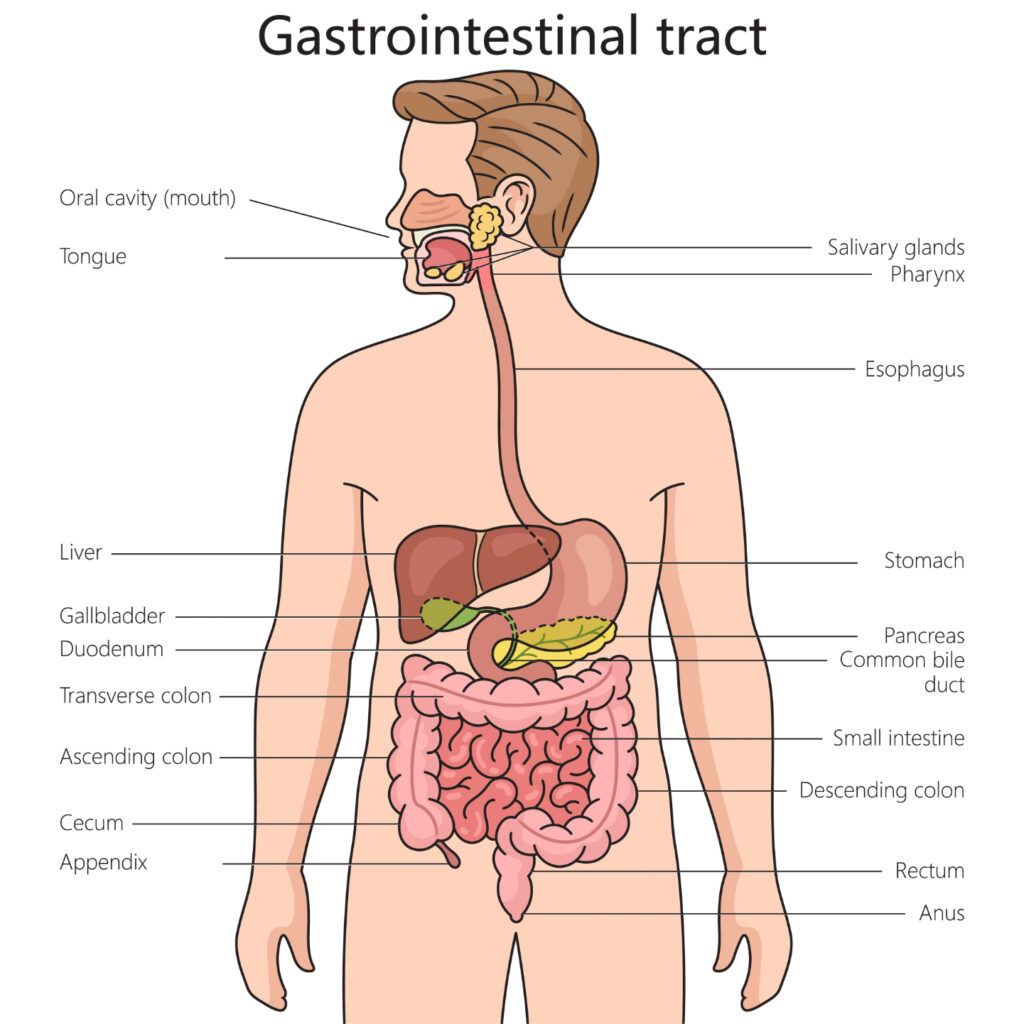
Jean-Pierre Barral observed that digestive organs — especially the stomach, liver, and gallbladder — can influence musculoskeletal tension and posture because they are connected to the diaphragm, spine, and ribs via fascial tissues.
These connections help explain why digestive issues can sometimes refer pain or tension to areas like the neck and shoulders. Gastrointestinal disturbances can alter how the body breathes, maintains posture, or recruits neck muscles, particularly when the digestive organs are not moving freely as they should.
How it might contribute to neck pain
- Stomach issues such as gastritis, reflux, or ulcers create tension that may refer up through fascial connections. The stomach also has a direct mechanical relationship with the neck and throat via the oesophagus, and a neural connection via the vagus nerve; stomach-related neck restrictions often manifest as vertebral restrictions at C5 and C6.
- Liver or gallbladder dysfunction can irritate the diaphragm and surrounding connective tissues, leading to pain perceived in the right upper neck or shoulder region.
- Digestive discomfort altering posture (e.g., slumped position after meals), which increases load on neck and upper back muscles.
Signs this might be involved
- Neck pain that seems linked to eating patterns
- Acid reflux, bloating, or frequent indigestion
- Right-sided shoulder or upper back discomfort
- Pain that feels deeper or more diffuse than typical muscle tension
4. Kidneys and Urinary System: Lower Body Affecting the Upper
Why it matters
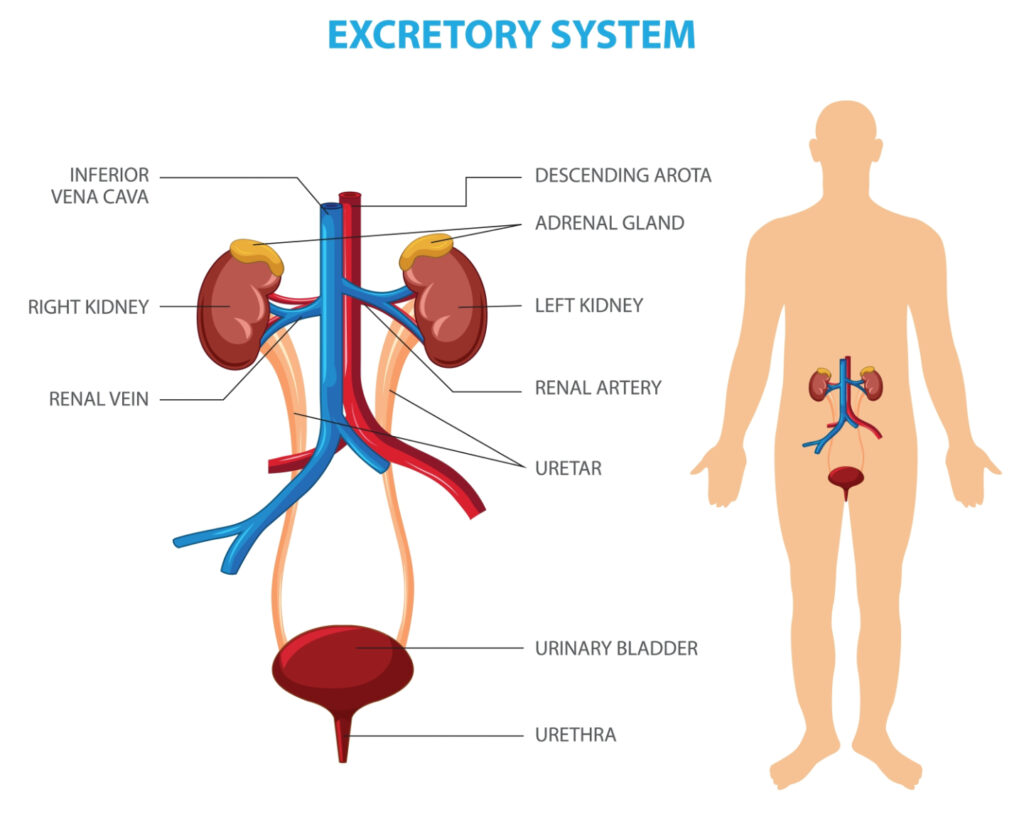
Although it may seem surprising, irritation in the kidneys can contribute to tension patterns that extend up through the back and neck, especially when the nervous system misinterprets kidney distress as musculoskeletal pain.
In Barral’s view, organs with limited mobility due to adhesions, scar tissue, or fascial restrictions can communicate tension throughout the body via connective tissue chains, and the kidneys are a common example because of their deep fascial links.
How it might contribute to neck pain
- Kidney irritation (from stones, inflammation, or chronic dysfunction) can create deep tension that travels up the back.
- The nervous system may interpret this deep tension as musculoskeletal pain in the neck and upper back.
Signs this might be involved
- Lower back or flank discomfort along with neck stiffness
- Changes in urination, pain with urination, or history of kidney stones
- Neck pain that does not improve with standard musculoskeletal treatments alone
5. Nervous System and Autonomic Stress: The Body’s Stress Response
Why it matters
This is not an organ in the same sense as the heart or stomach, but Barral’s work emphasises the nervous system’s role in how visceral dysfunction is felt in the body — especially the autonomic nervous system that controls internal organs.
The autonomic nervous system interacts with both the visceral and musculoskeletal systems. When it senses distress in an organ, the brain may amplify signals, leading to increased neck muscle activity or tension as a protective response.
How it might contribute to neck pain
- Chronic stress increases autonomic arousal and can make the neck muscles tense.
- Visceral irritation (even without obvious symptoms) can trigger reflex changes in muscle tone.
Signs this might be involved
- Neck pain that fluctuates with stress levels
- Pain that is not clearly linked to structural causes
- Tension that feels “wired” or heightened with emotional stress
Understanding Visceral Referred Pain
A key idea in both Barral’s work and conventional medicine is the concept of referred pain. Referred pain happens when the nervous system interprets signals from one part of the body as coming from another — because many nerves from organs and muscles enter the spinal cord at similar levels. This is a well-recognised phenomenon in conditions like heart attack pain felt in the jaw or shoulder.
According to clinical pain science, visceral pain often feels diffuse, poorly localised, and may be perceived in muscles or joints far from the organ itself — for example, abdominal discomfort being felt in the back or neck region.
Barral’s visceral manipulation approach uses gentle touch to assess the movement and tension of organs and their connective tissues, aiming to restore natural mobility and reduce the strain patterns believed to contribute to pain.
What This Means for You as a Patient
1. Neck pain isn’t always “just muscles”
If you’ve had neck pain that hasn’t fully responded to standard treatments, an evaluation that considers visceral contributions — especially when symptoms don’t fit typical patterns — might help explain why. Issues such as digestive discomfort, breathing problems, or stress can subtly contribute to neck tension.
2. A full picture is important
No single approach is right for everyone, and Barral’s model is one piece of a broader holistic assessment. Your clinician may combine structural, neurological, and visceral factors to identify hidden contributors to your pain.
3. Symptoms to watch for
Pay attention to associated symptoms, such as digestive complaints, breathing difficulties, or systemic discomfort. These may be clues that something deeper is involved.
4. Communicate with your healthcare team
If you’re curious about visceral factors in your pain, ask your clinician about it — but remember that visceral manipulation is a specific manual therapy approach taught to trained professionals and is best integrated as part of a comprehensive assessment.
Final Thoughts
Neck pain can be complex, and in some patients — especially those with chronic, persistent symptoms — underlying visceral tension or referred pain patterns may play a role. Jean-Pierre Barral’s visceral manipulation framework highlights the deep connections between organs, connective tissue, and musculoskeletal structures. While not all neck pain is visceral in origin, considering these connections can help broaden understanding, improve diagnosis, and lead to more personalised care.
If you suspect your neck pain doesn’t fit the usual mechanical pattern, discussing it with a clinician familiar with concepts of visceral and referred pain could open new pathways to relief.